The Caliche Barrier: Why Midland’s "Rock Hard" Soil Causes Hidden Sewer Failures
Why "Rock Hard" Soil Causes Hidden Sewer Failures in Midland, TX
If you’ve ever tried to dig a fence post hole in your Midland backyard, you’ve encountered it: the "Caliche Barrier." This bone-white, rock-hard layer of calcium carbonate is as much a part of the West Texas landscape as pumpjacks and tumbleweeds. While it provides a sturdy foundation for roads, it is a nightmare for your home’s underground plumbing.
At First Service Plumbing, Heating and Air Conditioning, we see the aftermath of our unique geology every day. For homeowners in the Permian Basin, understanding how our soil interacts with your pipes is the difference between a simple maintenance fix and a catastrophic sewer collapse.
Table of Contents
- What is Caliche and Why is it in Midland?
- The "Vise Effect": How Soil Expansion Breaks Pipes
- The Danger of Shallow Sewer Lines
- Warning Signs of a Hidden Sewer Failure
- Solutions for the West Texas Homeowner
- Frequently Asked Questions
What is Caliche and Why is it in Midland?
Caliche isn't just "hard dirt." It is a sedimentary layer where soil particles are cemented together by calcium carbonate. In our semi-arid climate, rainwater evaporates quickly, leaving behind minerals that harden over thousands of years into a concrete-like shelf.
For your plumbing, this creates a rigid, unforgiving environment. Unlike the soft, loamy soils found in other regions, caliche does not "give." When the ground shifts—due to moisture changes or local vibration—your pipes are trapped against a surface that is often harder than the pipes themselves.
The "Vise Effect": How Soil Expansion Breaks Pipes
West Texas is known for its "boom or bust" rain cycles. When we get heavy desert downpours, the thin layer of topsoil above the caliche becomes saturated. Since the caliche layer acts like a waterproof floor, that moisture has nowhere to go.
The soil above the caliche begins to expand but is pinned against the rock-hard layer below. This creates a "vise effect." As the soil swells and shrinks, it puts immense "shear stress" on your sewer lines.
Older homes in Midland often have cast iron or clay pipes. These materials are brittle; when the ground shifts, they don’t bend—they snap. Even modern PVC pipes can experience "bellies" when the soil beneath them is unevenly eroded by water trapped on top of the caliche. This is a topic we've touched on in our guide to West Texas plumbing health.
The Danger of Shallow Sewer Lines
In many regions, sewer lines are buried deep to avoid the frost line. In Midland, plumbers of the past often stopped digging the moment they hit the caliche layer because it was too difficult to penetrate without heavy machinery.
This resulted in "shallow" sewer lines. Because these pipes are closer to the surface, they are more susceptible to weight stress from heavy vehicles and extreme temperature swings that cause the pipes to expand and contract. Furthermore, roots from thirsty mesquite trees will travel long distances to find the moisture trapped on top of the caliche, eventually infiltrating your pipe joints.
Warning Signs of a Hidden Sewer Failure
Because our soil is so hard, a sewer leak doesn't always "bubble up" to the surface. The caliche can hide a leak for months. Watch for these subtle clues:
- Indented Patches: If you notice a dip in your grass, leaking water may be washing away the subsoil on top of the caliche.
- Gurgling Drains: This is often the first sign of a "belly" or sag in the line caused by shifting soil.
- The "Lush Spot": If one patch of your desert landscaping is suddenly much greener, it’s likely feeding off a cracked sewer line.
- Persistent Odors: Sewage smells in your yard are a clear indicator that the "Caliche Barrier" has finally forced a pipe to crack.
Solutions for the West Texas Homeowner
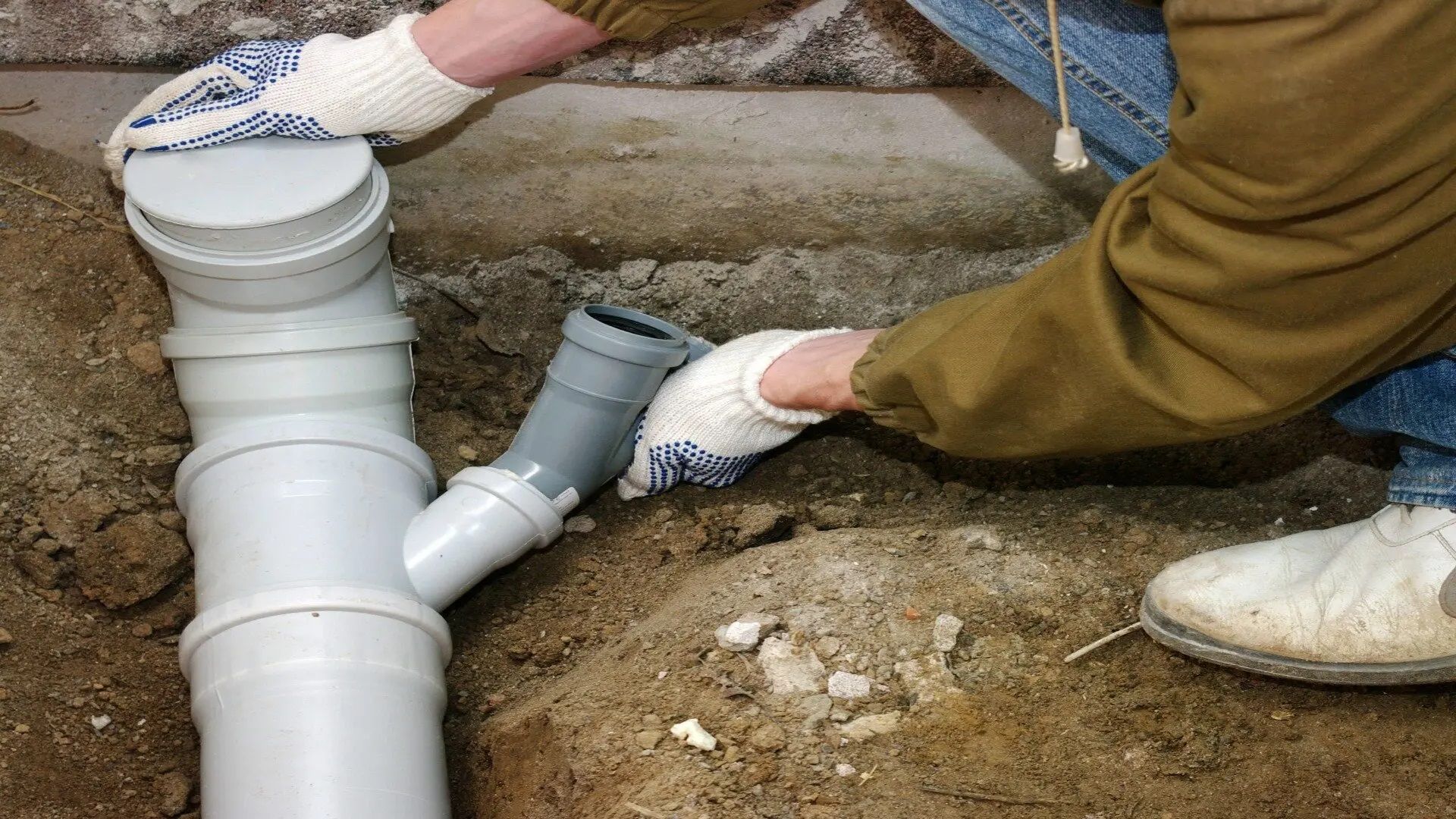
Fixing a sewer line in caliche requires specialized equipment. At First Service, we utilize high-definition sewer cameras to pinpoint exactly where the caliche has caused a break without digging up your entire property.
We also specialize in Trenchless Pipe Repair. This technology allows us to slide a new, flexible liner inside your old, broken pipe. This "pipe-within-a-pipe" is much more resistant to the "vise effect" that plagues Midland homes. Being proactive is always cheaper than an emergency replacement.
Frequently Asked Questions
Does every home in Midland have caliche? Most do. While the depth varies, the majority of the Permian Basin sits on some form of caliche or caprock.
Can I prevent my pipes from breaking in this soil? The best prevention is moisture control. Ensure your gutters move water away from your foundation and sewer cleanouts to prevent the soil from swelling excessively.
Is a sewer camera inspection worth it? Absolutely. Given that caliche hides leaks so well, a camera inspection is the only way to see the structural integrity of your pipes before a total collapse occurs.
Don't Let the Ground Win
Your home's plumbing is in a constant battle with the West Texas ground. If you suspect your sewer line is struggling against the "Caliche Barrier," don't wait for a total backup.
First Service Plumbing, Heating and Air Conditioning has the local expertise to handle Midland's toughest soil conditions. We understand the ground we live on.
[Schedule Your Sewer Camera Inspection with First Service Today]